
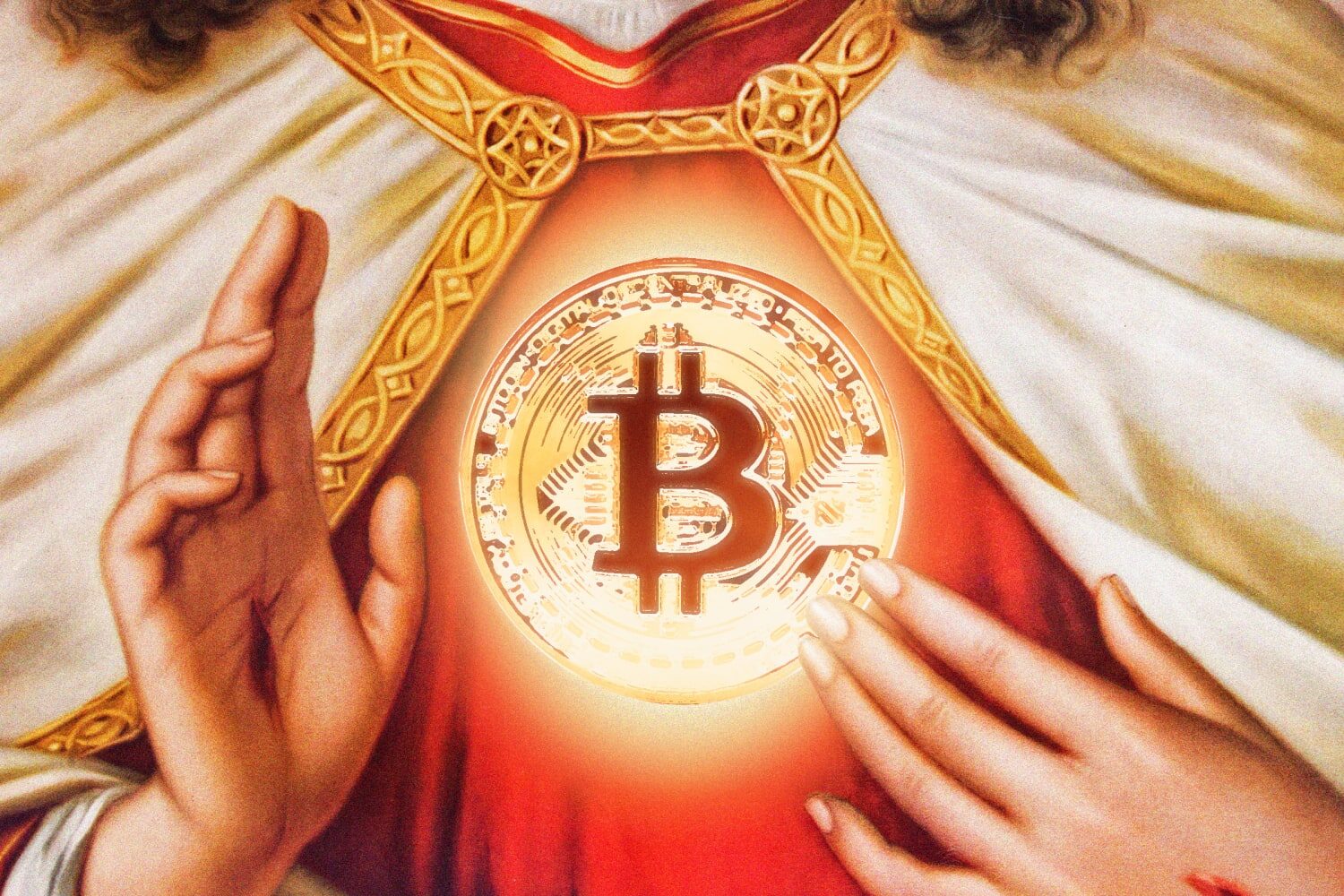
A growing segment of Christian communities is embracing Bitcoin and other digital assets, framing them not just as investments, but as tools aligned with broader values around financial sovereignty, decentralization, and even faith-driven purpose.
The trend, while still niche, reflects a broader evolution in how crypto is being interpreted and adopted across different social groups.
From Investment to Ideology
For some Christian adopters, cryptocurrency represents more than a speculative asset.
It is being framed as:
- A hedge against inflation and centralized monetary systems
- A pathway to financial independence
- A tool for supporting religious missions and communities
In some cases, churches have begun accepting tithes in cryptocurrency, while influencers and pastors are incorporating Bitcoin into sermons, media content, and community discussions.
This blending of faith and finance echoes earlier movements where religious communities engaged with entrepreneurial or alternative economic models.
Buying the Dip — With Conviction
Despite Bitcoin’s volatility — including a roughly 45% decline from its 2025 peak — many within this emerging subculture remain committed.
Some investors interpret price drops not as risk signals, but as opportunities to accumulate assets at lower prices, reinforcing a long-term belief in Bitcoin’s value.
This mirrors broader crypto market behavior but is often reinforced here through community narratives and shared ideological framing.
Influencers and Christian Community Networks
The movement is being shaped by a mix of:
- Christian financial influencers
- Online communities and subscription-based groups
- Podcasts, YouTube channels, and social media platforms
These networks provide education, investment perspectives, and community engagement, often blending financial advice with religious messaging.
However, this dynamic has also led to criticism, particularly when predictions fail or when audiences question the credibility of influencers.
A History of Faith and Enterprise
The intersection of religion and financial opportunity is not new.
Historically, Christian religious communities have engaged with:
- Direct sales networks
- Entrepreneurial ventures framed as mission-driven
- Financial systems aligned with ethical or ideological beliefs
Crypto, in this context, becomes the latest iteration — offering both technological novelty and ideological resonance.
Risks and Criticism
The rise of faith-driven crypto adoption has also raised concerns.
Experts warn that tight-knit religious communities can be vulnerable to financial misconduct due to high levels of trust among members.
There have already been cases where:
- Investors lost significant sums in crypto schemes promoted within religious circles
- Leaders faced backlash for promoting tokens that quickly lost value
Critics argue that blending spiritual authority with financial promotion can create ethical risks.
Crypto in the Church
Some churches are going further, hosting educational sessions on cryptocurrency or integrating digital assets into their financial practices.
For certain believers, crypto is seen as:
- A practical financial tool
- A philosophical alternative to traditional systems
- A means of aligning economic behavior with personal values
Others, however, remain skeptical about mixing religious practice with speculative assets.
A Broader Cultural Signal
The emergence of a Christian crypto subculture highlights a larger trend: cryptocurrency is no longer confined to technologists and traders.
Instead, it is being:
- Interpreted through cultural and ideological lenses
- Adopted by diverse communities with distinct motivations
- Embedded into everyday belief systems and social structures
Where This Trend Leads
The long-term trajectory of this movement remains uncertain.
Its growth will likely depend on:
- Bitcoin’s price stability and long-term performance
- Regulatory clarity
- The credibility of influencers and community leaders
What is clear, however, is that crypto’s influence is expanding beyond markets into meaning — shaping how different groups understand money, value, and control.
In that sense, the intersection of faith and cryptocurrency may be less about theology and more about a shared search for financial autonomy in an increasingly uncertain economic landscape.